
-1-1.webp)
Adjusted for purchasing power, China is already the world's largest economy.
China is an important trading partner for Germany, both in terms of exports and imports. In the case of cars, the export relationship has been reversed in recent years: China has long been the export engine for German vehicles. In the meantime, more cars from China are imported to Germany.
China is a system rival of the USA and therefore of the West - thanks to its rapidly growing economy and increasing technological leadership.
How has a communist country managed to catch up with and overtake Germany in its key industries?
To understand this, we need to clear up misperceptions.
- China is centrally planned but decentrally executed: In the mayoral economy, political leaders act accountably like CEOs-with a clear target framework and clear incentive model. Performance is rewarded, underperformance has personal consequences. This is a crucial, often overlooked component of China's rise in recent years.
- China uses planning similar to management best practices in the auto industry. Planning coordinates all resources and institutions to achieve common goals. A central framework of goal posts is provided, which many institutions fill with details in a decentralized manner and coordinate with each other. And this is counterintuitive: China's authoritarian one-party system makes this planning process especially efficient. The party is the central controlling and steering body over all bodies of the economy, administration, military, education and science - but it cannot exist without it. This delicate balance is difficult to understand as an outsider. However, it seems to be succeeding if you look at the results achieved.
- China is returning to its rightful place in global economic performance - a place it has held for centuries. The country has enormous human resources, which are being further activated through education. It has expanded its logistics networks and has a remarkably stable currency. These are all factors for a growing economy. China's economy has been very weak over the last hundred years, in part because of occupation and colonialism. This rise is also a return to the mean. The potential for further growth remains considerable. It is only a matter of time before China also becomes the world's largest economy in nominal terms, i.e. on a US dollar basis.
China's determination and achievement of its goals are impressive. This can be seen in per capita productivity, educational attainment and life expectancy - all of which are trending upwards.
China's strategic archilles heel is its shrinking, ageing population
Only the birth rates of 0.9 to 1 are very far from the reproduction level of 2.1 children per woman - a problem that China shares with the West, but which is much more pronounced here: In 2100, only 36% of the population will still be of working age. In 70 years, 64% of China's population are either to young, to old or to sick to contribute to the economy.
The Communist Party already knows that the gap will be too big to close. The only way out is a massive increase in productivity and the expansion of healthcare technologies beyond Western standards.
This brings us back to Li Qiang's (李强) remarkable speech to the People's Congress on March 5, 2025. The planning process, the mayoral economy, China's continued enormous economic potential and its strategic Achilles' heel-all of this forms the crucial context for understanding this document.
For every auto geek: China's dominance in electric vehicles is not an end in itself, but part of a comprehensive plan. China wants to achieve CO₂ neutrality, but its main goals are to improve society and the well-being of the people of China, and only for those reasons does it care about the conservation of resources.
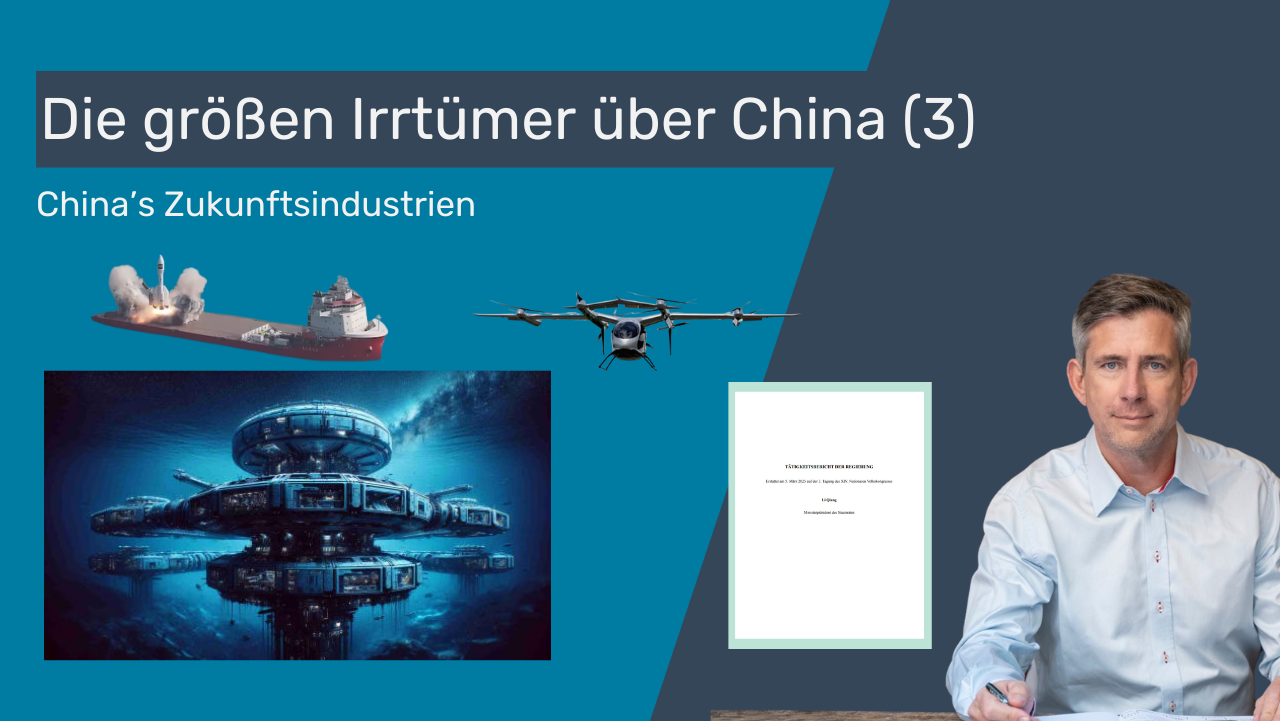
China is sharing an odd list of its future technology with the globe.
The list of future industries presented by Li Qiang sounds ambitious and utopian - like a novel by Jules Verne (who provided in the 1860 a peek into a future of technology and how this changed the world). The speech of Li revolves around two central themes: Productivity (automation, data processing, opening up new spaces through logistics) and quality of life.
- The list of new technologies, that China will develop, starts with commercial space travel: Gravity-One by Orient Space-a 30-metre-high solid-fuel rocket that was launched from a ship on 11 October 2025 and carried a payload of 6.5 tons. This is the Chinese answer to SpaceX. China still has a lot of catching up to do: While Gravity-1 carries around 6 tons into orbit for near-Earth satellites, Starship carries around 150 tons for the next moon or Mars mission. After all, China obtained an independent transport link to the lower orbit.
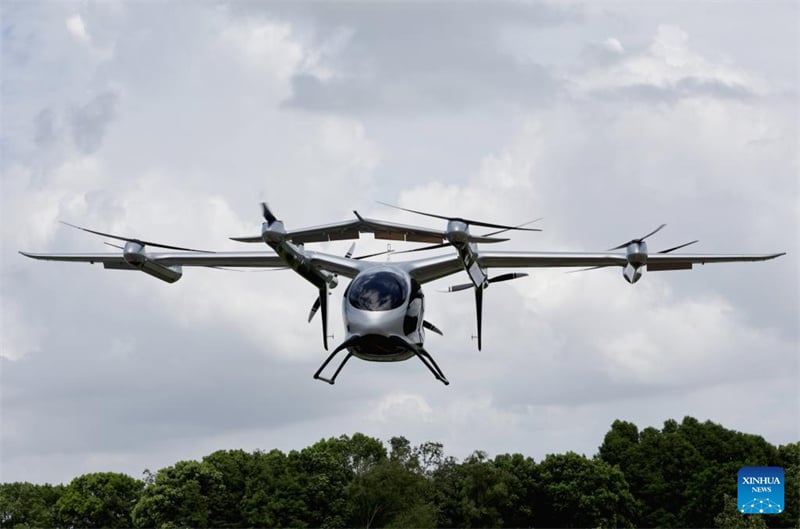
- Low-altitude aviation connects suburbs and smaller cities with China's major metropolitan areas. This involves the use of electrically powered aircraft for 2 to 20 passengers. We know the principle from New York: those who can afford it fly from JFK airport to Manhattan by helicopter instead of taking a cab. China relies on economical aircraft in large numbers. Airports are being connected more efficiently, road networks and high-speed trains are being relieved and technological leadership in an emerging industry is being secured.
- Deep-sea science to discover new habitats, mineral resources and resources for medical use. The Earth's surface with its biosphere only accounts for around 1% of living space - the oceans, on the other hand, make up 99%. This huge area has hardly been explored to date. What other nation invests in this area?

- Biomanufacturing refers to the industrial process in which biological systems - such as microorganisms (bacteria, yeasts), animal or plant cells-are used to manufacture products. It involves the large-scale use of living organisms or cell cultures to produce pharmaceutical substances, artificial cell structures for transplants or specific genes. In the next few years, it will be clear how this affects therapies and the efficiency of the healthcare system. Chinas share of scientific publications in the field of medicine is constantly growing.
- Quantum science and technology: While conventional computers follow one computing path, quantum computers follow several at the same time - making them exponentially more powerful for particularly complex problems. They could solve problems that are currently hidden behind the horizon of knowledge (e.g. how human thinking works). Quantum technology in cryptology is a form of arms race: it would crack today's highest standards (think Bitcoin) overnight and make them obsolete. Imagine the technological superiority a nation would achieve if it dominated both areas of information processing.
- Embodied artificial intelligence combines artificial intelligence with advancements in sensor technology (e.g. LIDAR) and robotics. China's annual gala on Lunar New Year's Eve showed off Beijing's huge leap in technology when humanoid robots performed a joint martial arts routine that set a lot of new records. Systems are emerging that can replace the physical work of humans in factories (e.g. car factories), but also in hospitals or care. By 2029, China will account for 30% of the global market and is thus finding a technological answer to its socio-demographic challenge.

- 6G network: One of the least recognized factors in the West, but crucial to technological progress, is mobile technology. 6G reaches speeds of 1 Tbit/s, creating the basis for autonomous driving, smart cities and highly efficient industrial automation. China is currently the only country with a functioning 6G satellite connection. This technology is one of the key infrastructure projects in the developed world. Those who gain a competitive advantage here will secure specific advantages in transportation, energy supply and smart manufacturing networks.
What is the purpose of this highly ambitious list? Why is it being published?
Such a list can be used to guide investments, align educational programs and create a legal framework. Topics can be focused or deprioritized: anything that is not on the list will not receive any additional resources.
Electromobility is missing from the list. It has already been planned, capitalized and left to market forces.
Nuclear energy technology is also missing, as China is pursuing an independent 50-year plan for energy self-sufficiency and is already a world leader in some technologies (e.g. molten salt thorium reactors, modularized fast breeder reactors). At the same time, China already has the largest expansion of solar and wind power plants, the longest 500 kV transmission network and the longest high-speed train network.
Military technologies are naturally not on the list. However, dominance in the undersea sector, in quantum cryptography, in AI-powered robotics, in infrastructure-roads, railroads, bridges, tunnels-as well as in 6G technology automatically brings military advantages.
Unlike in the West, large-scale projects are not driven by short-term ROI, but are part of a larger plan: To return China to the place in the world it once occupied. This requires education, research, cutting-edge technology, first-class infrastructure and security.
Intelligent manufacturing networks - relevant for the automotive industry
The following pages of Li Qiang's report are particularly revealing as they translate these guidelines into concrete, comprehensive scenarios.
China now has the most powerful industrial base in the world. The country has become the factory of the world-initially through cheap labor from rural regions. However, labor costs have now risen. China's response: massive investment in education. While around 130,000 to 150,000 engineers complete their training in Germany every year, there are 1.3 to 1.5 million in China - 8 to 12 times as many. By comparison, the USA trains around 260,000 engineers, Russia around 450,000 and India around 1.5 million.
The intelligence of the world's largest manufacturing network begins with the sheer number of engineers. Hardly any country will be able to snatch this rank from China.
In the future, national and international manufacturers will be able to produce in China - because China will have all the technologies and innovations at its disposal. At the same time, China is building intelligent production and logistics networks to cope with the destructive capacity fluctuations of the market economy.
- China is focusing on advanced manufacturing technology and service-oriented manufacturing. It is planned to better handle and watch over entire production networks. At the same time, a network of service providers who know the business and how to use technology will be built.
- China is promoting the establishment of a nationwide unified market and developing an integrated, open transportation sector. The aim is to reduce logistics costs for society as a whole and make more efficient use of national infrastructure resources.
- For specific disruptive technologies (e.g. AI robotics), unicorns and gazelles are to be promoted among companies.
- China is building an end-to-end, high-quality education system - from elementary school to university. Vocational training is fully integrated. Sport is used to promote mental health and resilience. Science is to work independently and autonomously. Basic research is specifically prioritized in the allocation of funds.
- China attracts foreign experts and improves support mechanisms for international talents. Services for foreign experts are optimized to promote their integration and contribution to technological and economic development.
- China creates targeted performance incentives for experts. The categorical evaluation of professionals will be strengthened to combat the overvaluation of academic titles in science and research. The goal is to promote actual performance and practical innovative strength more powerfully. This suggests that in the future, a doctorate or MBA will be less important than practical experience and success.
- China is reaffirming its "dual imperturbability", i.e. the simultaneous strengthening of state-owned enterprises and the private sector. Private enterprises are to build a modern Chinese-style operating system that combines efficiency, responsibility and party leadership. State-owned enterprises are supposed to provide stability in public services. At the same time, a stricter punishment system for breaches of trust and unfair behavior will be introduced to ensure market integrity and fairness.
This overall scenario combines a wide variety of aspects: Core competencies, crisis-like fluctuations, education system, capital supply, migration, individual incentive and punishment systems as well as the coexistence of private and state-owned enterprises.
The future will show whether all of this will work. Not all of Jules Vernes' predictions came true, such as the fact that no one has traveled to the center of the Earth yet. However, there is a very high probability that within a decade-or sooner-China will build an intelligent manufacturing and logistics network that is competitive on the global market in terms of cost and quality.
More competitive than in Germany at present.
Because here we are wrestling with comparable plans. The only comparable paper is the Draghi Report of 2024, which is addressed to the EU - which is not a state and has no robust governance or implementation power. It is more of a voice from the sidelines than a plan that has already been implemented.
What has this got to do with the automobile industry?
This upswing in China is reflected in private car ownership: in the 1980s there were around 5 cars per 1,000 inhabitants - today there are 240 (Germany: 580, USA: 800).
With around 26 million cars per year, China is the largest car market in the world (Europe: 12 million, USA: 15 million). The country also leads in the production of battery electric vehicles with around 7.5 million units. Exports have risen from around 1 million to 5.5 million vehicles per year in the last five years - and the trend is still rising.
1. Cars worldwide will be predominantly Chinese in the future. A technical niche may remain for German cars.
At the same time, the Chinese car market will grow - unless private car ownership is replaced by public transportation, low-cost air travel and autonomous vehicles. However, investments are already being made in these areas too. Nevertheless, the market is likely to grow further to 27 to 36 million cars by 2030.
With the rising standard of living in China, incomes are growing and the advantage of being a low-cost developing country no longer applies. According to the logic of the automotive industry, this usually means relocation to more favorable locations - as we have seen for around 100 years. Unless the production factors improve: the costs of energy, supply, logistics and capital offset the higher labor costs and productivity increases.
2. Production costs in China will continue to fall as massive investments are made in production factors such as energy, logistics and automation.While we in Europe are still debating whether nuclear power plants are sustainable, China is already building the world of tomorrow: massive supplies of cheap energy, highly productive intelligent manufacturing and logistics networks, next-gen educational systems and smart living spaces, modern healthcare.
3. The car retail will be the least affected. The number of vehicles in Germany and Europe will remain constant. The network for customer contact and customer care will remain indispensable.
The change for people in Germany is historic. It would be interesting to know how people in China are experiencing this change. There must be a lot of winners and certainly some losers. But judging by what the Chinese are planning and what their figures show, there can't be many.
China is still an exotic destination for many. It would not be surprising if, in the coming years, significantly more people want to see for themselves what is going on in China.


